Boston Globe: Local Jewish leaders react with heartbreak, determination following antisemitic shootings in Australia
By Brian MacQuarrie Globe Staff,Updated December 15, 2025, 6:26 p.m.
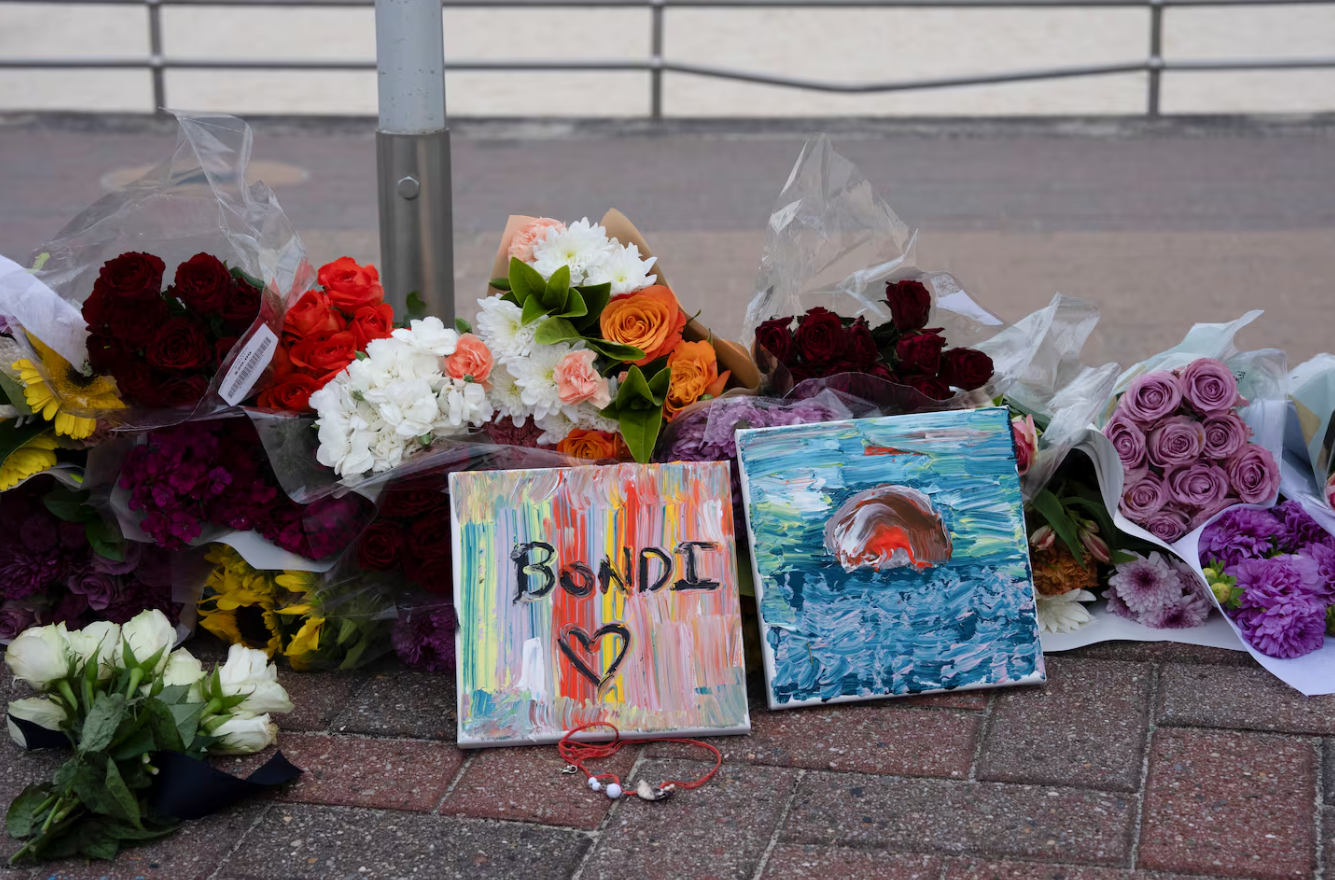
The mass shooting in Australia that killed 15 people and wounded dozens more Sunday at a Jewish holiday celebration has stunned and saddened Jewish leaders half a world away in Greater Boston. Its repercussions, they said, are likely to heighten safety concerns that many Jews here already feel.
As the eight-day Hanukkah holiday continues, security has been reexamined and even strengthened at some local synagogues and public events, Jewish officials said, as brazen acts of antisemitic violence increase in America and abroad.
“Sadly, a horrific attack like the one in Sydney not only takes lives, but tries to drive fear into our hearts,” said Rabbi Marc Baker, president of Combined Jewish Philanthropies of Greater Boston. “And precisely on the Hanukkah holiday, [that] can make people afraid to put their candles in the window, both literally and metaphorically.”
The mass shooting, carried out by a father and son, at a large holiday celebration near the heart of Sydney’s Jewish community, occurred on the first day of Hanukkah, which honors Jewish resistance to Greek efforts 2,100 years ago to eradicate Jewish culture.
One of the gunmen, Sajid Akram, 50, who arrived in Australia in 1998 on a student visa, was killed near Bondi Beach, police said. His Australian-born son, Naveed Akram, 24, is being held in custody. Authorities declared the shootings, the worst in Australia in nearly 30 years, to be an act of terrorism.
News of the shootings carried painful echoes for Jewish people.
“Many of us find ourselves filled with that all-too-familiar mix of sorrow, anger, anguish, and rage that follows tragic acts of mass violence. It’s the sort of moment that can be hard to hold in our own bodies,” said Jonathan Feingold, a Boston University law professor who produces a podcast on race and racism.
“It is also a tragic reminder that we need to better understand how antisemitism operates in today’s world so that we are better positioned to prevent its most dire consequences,” Feingold said.
Robert Leikind, regional director of the American Jewish Committee New England, said the Sydney massacre shows the global reach of virulent antisemitism.
“We know that good people, whatever their faith, reject this kind of violence,” Leikind said. However, he added, “within the Jewish world, this is not a circumstance without precedent. And so I think it’s hard not to imagine people having concerns for their children, their grandchildren.”
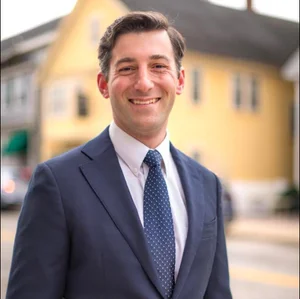
State Representative Simon Cataldo of Concord, who served as co-chair of the state’s Special Commission on Combating Antisemitism, described the shootings as “horrifying and scary” with a resonance felt far beyond Australia. “It’s painful to run your thought process through how many there have been recently,” he said.
The commission last month issued a broad set of recommendations to confront antisemitism in Massachusetts that combine “strong civil rights protections, civic education, and moral responsibility.”
As that work continues, Cataldo said, the region’s Jewish residents have become accustomed to seeing police or private security outside synagogues or at Jewish community events. “It’s an experience so different from other faiths in America,” he added.
But in the spirit of Hanukkah, Jewish leaders said, any sense of increased anxiety should not diminish the holiday’s tribute to religious and cultural resilience.
“What I say to my friends who ask, ‘What can I do?’ is that you can go to a menorah lighting,” Cataldo said. “And put a menorah in the window to show that we are still here.”
Jeremy Burton, chief executive officer of the Jewish Community Relations Council of Greater Boston, also stressed the need for resilience and pride.
“We celebrate the enduring thriving of the Jewish people,” Burton said in a statement. “We refuse to be deterred by antisemitism in all its forms. We appreciate the solidarity and support of our civic leaders who understand that it is society’s obligation, not ours, to protect our gatherings and our safety.”
Cataldo said that an increasing number of non-Jewish people are acknowledging and confronting antisemitism.
“I am seeing a difference in the number of folks who speak up who are not Jewish and name the fear that the Jewish community feels,” he said.
In addition, Cataldo said, “Jewish people are really beginning to speak up for themselves and explain what it’s like to be Jewish in the world and in America right now. For many years, we kind of kept to ourselves.”
Jody Kipnis, co-founder of Holocaust Museum Boston, said that silence and inaction in the face of antisemitism are unacceptable.
“The Holocaust did not begin with mass murder. It began with hatred normalized, with indifference, and with the failure to confront antisemitism when it first appeared,” Kipnis said. “Those lessons are not abstract. They are urgent and present-day.”
Leikind, the American Jewish Committee director, said that Jews in the area will mourn the victims in Australia, but that they will celebrate Hanukkah nonetheless.
“We will survive,” he said. “We will continue our customs. We will continue our rituals. And we will continue to raise generations who will continue our teachings.”